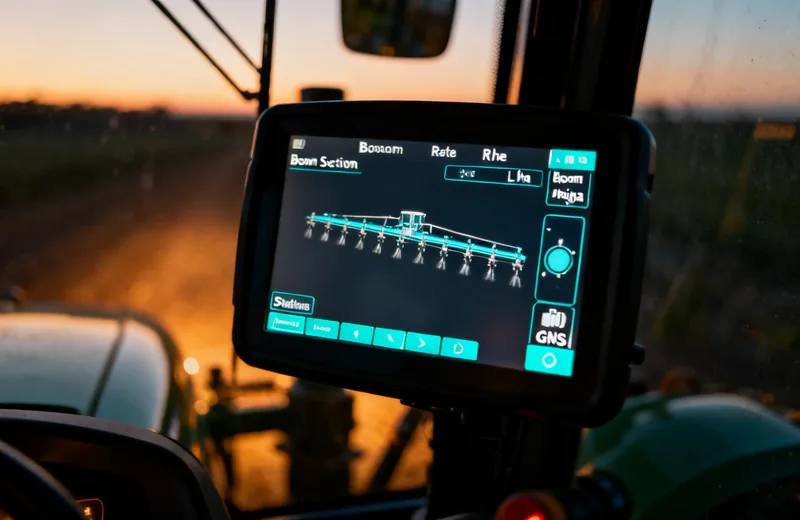
Instrument the boom
Install or verify boom-height sensors, section valves and a calibrated speed source so the controller sees the same geometry the operator sees.
Connect boom-height sensors, section automation and rate logs to the crop protection window your team actually manages. The goal is fewer unverified assumptions between the cab display and the hectares treated.
Book a controls reviewThis horizontal roadmap describes how spray automation usually matures on a commercial farm between a 2025 baseline audit and a 2026 season-close review. Stage labels are planning markers, not claims of yield uplift.
Install or verify boom-height sensors, section valves and a calibrated speed source so the controller sees the same geometry the operator sees.
Enable rate control and section shut-off against prescription or fixed L/ha targets. Log alarms when pressure or flow leaves the agreed band.
Export as-applied maps with tank batches, nozzle class and weather notes so agronomy and compliance reviews share one evidence trail.
Compare planned versus treated hectares, drift incidents and parts failures. Feed the findings into next season’s nozzle and spare staging plan.
Section valves should react fast enough at headlands to protect watercourses. Exact timing depends on valve type, boom plumbing and travel speed.
Many fleets review rate controller performance inside a ±5% band of target L/ha during calibration runs with water before product is loaded.
Boom-height sensing is sized to the working width. Uneven terrain on a 36 m boom needs more frequent height correction than a short mounted boom.
Names below describe common integration topics. They are not endorsements or proof of certified interoperability for every software revision.
Provide speed and position inputs for section logic and as-applied mapping. Accuracy class and signal dropouts must be stated for the field set.
Receives as-applied files, tank batches and operator notes. Export format and data ownership should be written into the project scope.
Support firmware checks, fault code reading and harness tests during in-season triage without guessing from cab symptoms alone.
Inform spray-window decisions on wind and inversion risk. Weather data does not replace label-required buffer rules or operator judgment.
Geometry, rate and batch identity tracked together
From boom sensing to season-loop review
Agronomy and fleet ops share the same as-applied record
One export path for audits and dealer diagnostics
Share current controller model, boom width, GNSS source and whether you need section automation, as-applied export or dealer diagnostic access. We return a staged plan instead of a generic “digital farming” pitch.